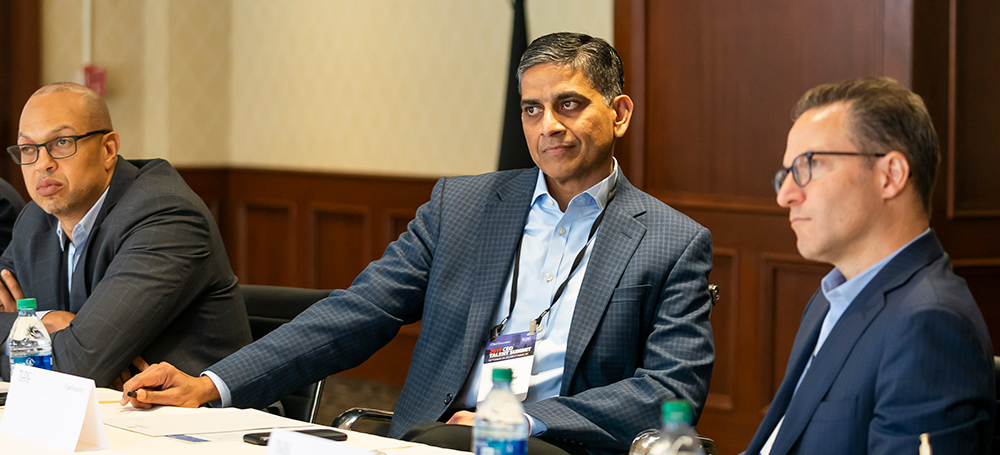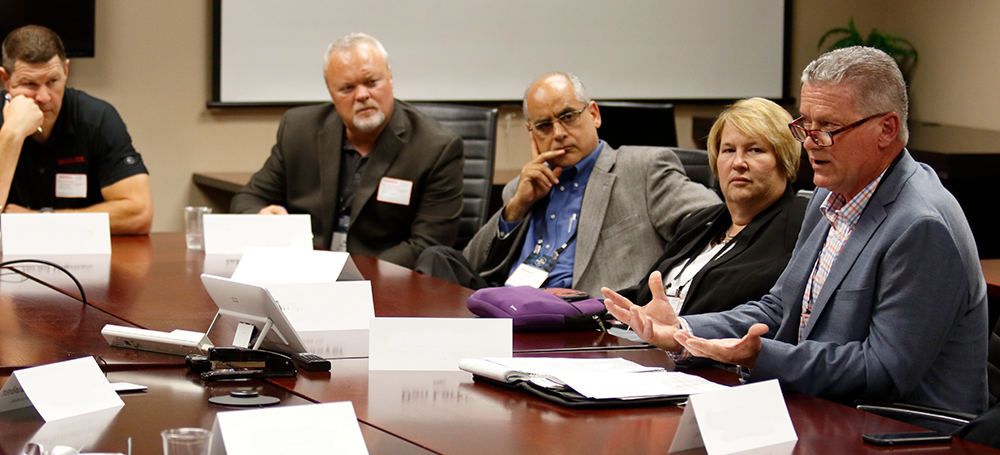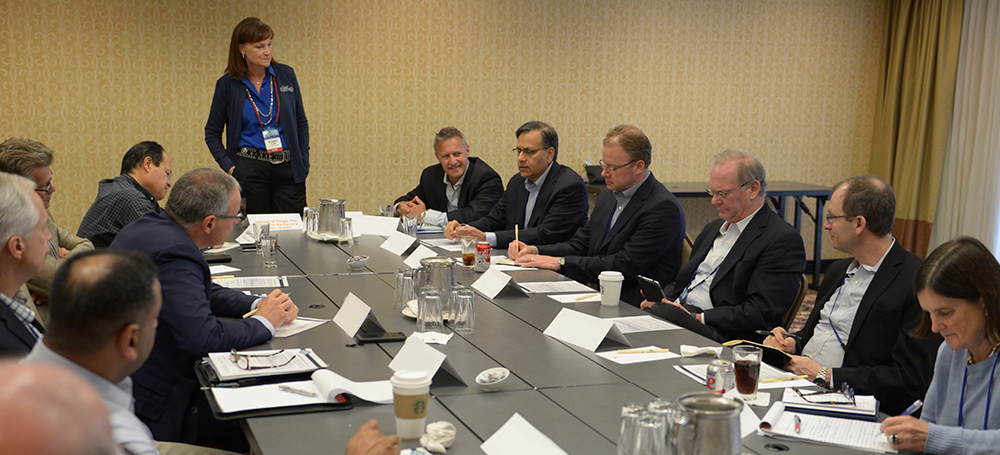

Profit from the experience of your CEO peers. Chief Executive Network (CEN) allows you to profit—personally and professionally—from peer CEOs in your industry, location, or market who have first-hand experience with the challenges and opportunities you face and are committed to your success.
Peer into the future and spot new opportunities. As the CEO, you are uniquely responsible for synthesizing technology, customer, competitor, societal and economic trends. CEN provides peer and expert perspectives that can help drive your organization's future.
Maximize your effectiveness in minimal time. In just a few days a year, you will identify and concentrate on those initiatives that can have the greatest impact.
Membership Benefits
Peer Group Meetings
Join peer CEO advisory board meetings, designed for busy executives, to address urgent issues and receive specific feedback; boards based on industry, location, or market meet semi-annually or quarterly.
Conferences
Members receive exclusive access to Chief Executive events including the annual Leadership Conference and Talent Summit.
Member Connections Program
This program allows you to reach out to our network of over 600 Chief & Senior Executives and receive advice/perspective/best practices around critical business issues.
Peer Advisory Board Sessions
In these virtual sessions, each member can describe one key issue in which they would like input/advice from the group.
Research, Reports & Content
Receive access to priority research and content published by Chief Executive Magazine.
Video: Welcome to Chief Executive Network (04:39)







What could your organization accomplish if you could peer into the future?
Find Your CEO Peer Network
Industry-specific Peer Networks
Immerse yourself in a dynamic community of CEOs from your industry, fueling collaboration, igniting innovation, and accelerating your path to profitability and success.

Architecture
Only by meeting with the CEOs & Managing Partners of similar businesses can you get unbiased advice and expert counsel – they are the only other people who stand in the same shoes.

Distribution/Wholesale
Chief Executive Networks (CEN) provides expert-facilitated wholesale and distribution CEO peer groups that ensure you get relevant input in the most efficient way possible.

Engineering
By meeting with the CEOs and Managing Partners of non-competing engineering firms, you can get unparalleled advice, insights and value.

General Contracting
Smart construction company CEOs turn to non-competitive construction company peers in Chief Executive Network – no one better understands your issues and the tradeoffs you face than CEOs in similar situations.

Lodging/Hospitality
CEN's Lodging & Hospitality Peer Network provides support and knowledge to help navigate the challenges of running a lodging business.
Subheadline space
Manufacturing
Chief Executive Network is the premiere organization in the world specifically designed to give manufacturing CEOs practical take-home value.

Services
CEN empowers the services industry by connecting professionals, sharing knowledge, and providing support to navigate challenges and drive success.

Software/Technology
Chief Executive Network (CEN) members benefit from the experience and best practices of high-performing tech company peers. It’s wisdom that is simply unavailable elsewhere.

Sub-Contracting
By meeting with CEOs and owners of non-competing electrical, mechanical, HVAC, plumbing and other sub-contractor businesses, you will gain valuable ideas, insights and advice to grow your business.
Local Peer Networks
Join forces with like-minded CEOs in your geographic area, fostering collaboration, driving innovation, and propelling your business to new heights of profitability and success.

Chicago, IL
Join CEN's Chicago CEO Peer Network to connect with local executives, gain valuable insights, and achieve your business ambitions through trusted collaboration and continuous improvement.

Detroit, MI
Join CEN' Detroit CEO Peer Network to connect with local executives, gain valuable insights, and achieve your business ambitions through trusted collaboration and continuous improvement.

Charlotte, NC
Join CEN's Charlotte CEO Peer Network to connect with local executives, gain valuable insights, and achieve your business ambitions through trusted collaboration and continuous improvement.

Cincinnati, OH
Join CEN's Cincinnati CEO Peer Network to connect with local executives, gain valuable insights, and achieve your business ambitions through trusted collaboration and continuous improvement.

Cleveland, OH
Join CEN's Cleveland CEO Peer Network to connect with local executives, gain valuable insights, and achieve your business ambitions through trusted collaboration and continuous improvement.

Columbus, OH
Join CEN's Columbus CEO Peer Network to connect with local executives, gain valuable insights, and achieve your business ambitions through trusted collaboration and continuous improvement.

Columbia, SC
Join CEN's Columbia CEO Peer Network to connect with local executives, gain valuable insights, and achieve your business ambitions through trusted collaboration and continuous improvement.

Greenville, SC
Join CEN's Greenville CEO Peer Network to connect with local executives, gain valuable insights, and achieve your business ambitions through trusted collaboration and continuous improvement.
For Your Top & Emerging Leaders:
We also bring together peer networks for your senior executives and emerging leaders, providing them with connections, insights, and growth opportunities.


Interested? Get in touch with CEN.
See if you qualify and would be a good fit.
Fill in the form below and we’ll send you our brochure and a sample meeting agenda. Or call us today at (785)832-0303.

Chief Executive Network members share insights and experience with peers who have been down the same road facing similar challenges and opportunities.
“Thank you for everything! This has truly been one of the most worthwhile experiences of my career/life. The presentation, the warmth, the suppor. Each of you has made a lasting impact on me that I will not soon forget.”
Javier Zesati
Regional Manager - West Coast
Backyard Products, LLC